

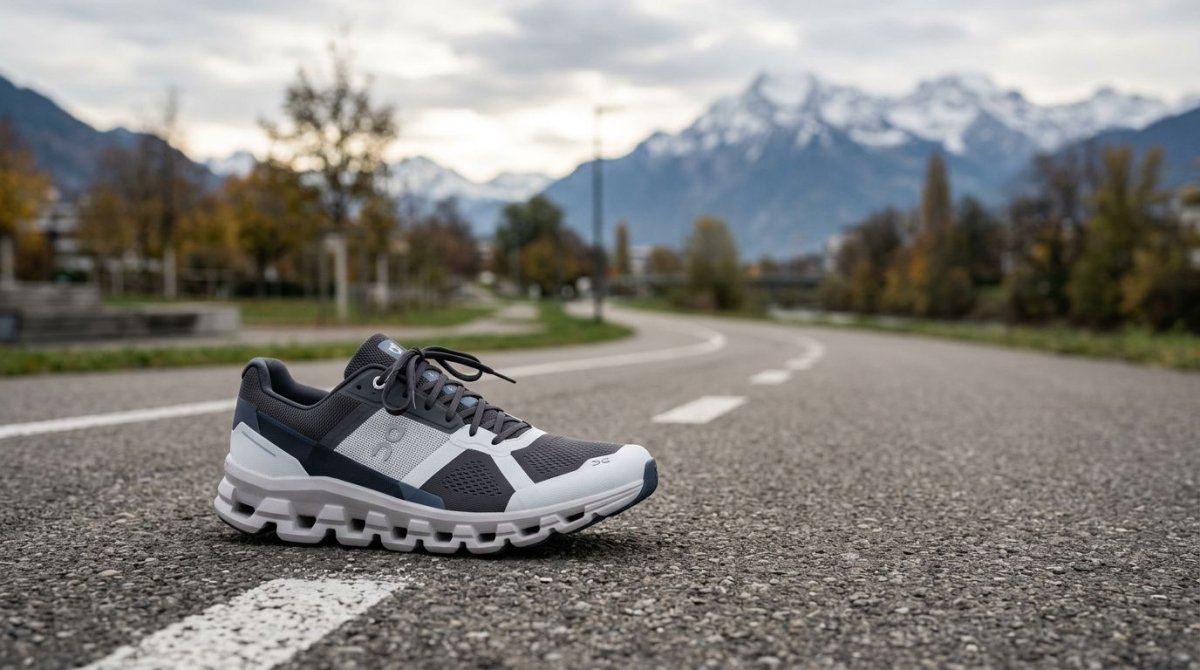
A shoe brand that began with garden hose pieces now appears on city streets, gym floors, and running paths worldwide. The On Running history is closely tied to a simple design goal: make landings feel cushioned without making the entire shoe feel heavy or soft.
For shoppers, that story matters because On shoes don't all feel the same. The Cloud family suits daily wear, while Cloudrunner, Cloudmonster, Cloudsurfer, and Cloudswift serve different types of athletes. Understanding the brand's development makes it easier to choose the right pair for your routine.
On Running History Starts in Switzerland
A former athlete tests a new sole
On was founded in Zurich, Switzerland, in 2010 by former professional athlete Olivier Bernhard, along with David Allemann and Caspar Coppetti. Bernhard wanted to change the feel of running shoes at the moment a foot hits the ground.
Early experiments reportedly used pieces of garden hose attached to a shoe sole. The idea was simple but unusual. Instead of relying only on a thick layer of foam, the sole could compress in separate sections under pressure. Those sections became the basis for the pod-like outsole associated with On shoes.
The company named its cushioning platform CloudTec. Each hollow pod, or "Cloud" element, is designed to compress during landing and provide a firmer push as the runner moves forward. That visual design quickly made On shoes easy to recognize.
From a niche idea to a major sports brand
The brand gained attention through performance running, but its clean shape also appealed to people who wanted athletic comfort for everyday clothing. In 2019, tennis champion Roger Federer became an On shareholder and worked with the company on product development.
On became a publicly listed company in 2021. Its product range later expanded beyond basic road trainers into trail shoes, competition shoes, walking-friendly models, and lifestyle sneakers. The company continues to update its racing technology, including newer Cloudboom models with CloudTec Sphere and a curved Carbon Speedboard.
The On Running history therefore has two connected parts: a performance idea born in Switzerland and a broad consumer appeal built around distinctive design.
How On Running Shoe Design Works
CloudTec cushions the landing
On describes CloudTec with the phrase "land softly, push off hard." The pods compress when the foot strikes the ground, then become more rigid as the runner moves through the stride. The system is intended to create cushioning without the dense, uniform feel of a traditional foam platform.
Different On shoes use different Cloud shapes, heights, and arrangements. Smaller pods can create a lighter, more flexible feel. Larger pods usually provide a more substantial platform underfoot. The materials around those pods also affect the ride, so two shoes with similar-looking soles can feel different.
The design is most noticeable when walking or running on firm surfaces. Some people enjoy the defined step and springy transition. Others prefer a smoother sole with less visible structure. That difference is a matter of personal preference, not a sign that one design fits every foot.
Speedboard adds structure
Many On shoes also include a Speedboard, a stiff internal plate positioned between the upper and midsole. On says the board bends when the foot loads the shoe, then returns toward its original shape during toe-off.
The board helps shape the shoe's transition from landing to push-off. It can also make the shoe feel more directed than a soft, flexible sneaker. That structure appeals to runners who like a responsive step, although shoppers who want a relaxed walking shoe may prefer a less performance-focused model.
The traditional CloudTec and Speedboard combination remains central to On's identity. However, newer designs show that the brand no longer follows one single recipe. The Cloudsurfer, for example, became an important example of a newer approach that moved away from the long-running Speedboard setup.
On's cloud pods are a visual signature, but the shoe's actual feel depends on the full construction, including foam, geometry, plate design, upper, and outsole.
What On Running History Tells You About Today's Lineup
Cloud 5 and Cloud 6 suit daily movement
The Cloud 5 became one of On's most recognizable lifestyle models. Its lightweight build, compact shape, and slip-on-friendly design made it popular for commuting, travel, walking, and casual wear. It works well for shoppers who want an athletic-looking shoe that can handle a full day on their feet.
The Cloud 6 is the newer everyday member of the Cloud family. It is best viewed as a general-purpose shoe for walking, travel, errands, and light daily activity rather than a dedicated training shoe.
Choose the Cloud line when convenience and low weight matter more than maximum cushioning or structured running support. If you plan to run regularly, compare it with a true daily trainer before buying.
Cloudrunner adds support for daily training
The Cloudrunner line is aimed at runners and walkers who prefer a more guided, stable feel. It offers more structure than the casual Cloud models, making it a sensible choice for easy runs, gym sessions, walking, and longer days on hard surfaces.
The available On Cloudrunner 3 men's shoes feature CloudTec cushioning, Helion foam, a breathable mesh upper, a padded heel and tongue, and a rubber outsole designed for traction. The listed men's version weighs 311 grams, so it is built for support and comfort rather than the lightest possible race-day feel.
For everyday athletes, Cloudrunner is a strong option when a neutral lifestyle sneaker feels too loose or underbuilt. Its more substantial platform can also feel reassuring during slower runs.
Cloudmonster Brings More Cushioning
A max-cushion option for easy miles
Cloudmonster is the most obvious choice for shoppers who want a bigger, softer platform. Its larger Cloud elements create a more pronounced underfoot experience than the standard Cloud models. On positions the shoe for road running, long runs, recovery sessions, and daily mileage.
The men's Cloudmonster road running shoes combine large CloudTec elements with Helion superfoam and a Speedboard. The product description also lists a recycled-material upper and a soft sockliner. Those details support the model's focus on cushioning and repeated daily use.
A max-cushion shoe can make long walks and easy runs feel more comfortable, but it may feel bulky to someone who wants close contact with the ground. Cloudmonster is also taller and more visually prominent than the Cloud 5 or Cloud 6.
Matching Cloudmonster to your routine
Cloudmonster makes sense for runners who spend more time at an easy pace than sprinting. It also suits people who want one athletic shoe for recovery days, travel, and long periods of standing.
The women's Cloudmonster cushioned trainers are listed at 219.5 grams and include CloudTec, Helion foam, a Speedboard, and a durable rubber outsole. The lighter listed weight reflects the women's version, not a universal weight for every size or colorway.
Try the shoe with your usual running socks. A high-cushion design can change how your foot sits inside the shoe, so heel security and toe room matter as much as softness.
Cloudsurfer and Cloudswift Take Different Paths
Cloudsurfer favors a smooth neutral ride
Cloudsurfer is a neutral daily trainer for easy runs, moderate mileage, and regular training. It is a useful choice for runners who want a smoother transition without the more structured sensation of Cloudrunner or the larger platform of Cloudmonster.
Newer Cloudsurfer generations use CloudTec Phase, a midsole design that differs from the original pod-and-plate formula. The 2023 redesign is widely described as removing the traditional Speedboard. That change shows how On has adjusted its design language while keeping the Cloud name.
For shoppers, the lesson is practical: don't assume every On shoe has the same ride. Check the individual model's construction and intended use.
Cloudswift is built for city running
Cloudswift sits closer to a performance road shoe than the casual Cloud family. On positions it for urban running and everyday training, making it suitable for paved routes, short daily sessions, and runners who want a more responsive feel.
Its role is different from Cloudmonster. Cloudswift emphasizes a sleeker, quicker road-running profile, while Cloudmonster focuses on a larger cushioned platform. Neither is automatically better. The right choice depends on whether your routine centers on quick city miles or comfortable, slower outings.
How to Choose On Shoes for Everyday Athletics
Start with the activity you perform most often. A walking and commuting shoe doesn't need the same structure as a trainer used for four weekly runs.
| Your main use | On model direction | What to look for |
|---|---|---|
| Walking, travel, and casual wear | Cloud 5 or Cloud 6 | Low weight and easy everyday comfort |
| Easy runs with more guidance | Cloudrunner | Stable cushioning and a secure upper |
| Recovery runs and long outings | Cloudmonster | A larger, softer platform |
| Neutral daily training | Cloudsurfer | Smooth transitions and moderate cushioning |
| Urban road sessions | Cloudswift | A responsive feel for paved routes |
Fit still decides whether a shoe works. Leave comfortable space in front of the longest toe, keep the heel from lifting, and check that the upper doesn't press across the instep. Your feet often swell during long walks or runs, so test shoes later in the day when possible.
Also consider your surface. Cloud models are mainly associated with roads, sidewalks, gyms, and other firm ground. Trail running requires a model with suitable traction and protection, not simply the most cushioning.
The Cloudmonster Pearl/Ivory everyday sneakers show how On's performance features now cross into daily style. They include CloudTec, Helion foam, a Speedboard, hidden eyelets, and a rubber outsole. That combination can work for casual outfits, travel, and active days when a traditional running shoe would look too technical.
Why the Brand Still Appeals to Everyday Athletes
The most lasting lesson from the On Running history is that performance design can become part of ordinary footwear. CloudTec gave the shoes a recognizable appearance, while the brand's lightweight construction and clean styling helped them move beyond running stores.
Still, appearance shouldn't decide the purchase. A shoe that looks modern may not suit your arch, width, stride, or main activity. Compare the model's purpose with the way you actually spend your day.
On's lineup now covers several distinct sensations. The Cloud family feels casual and light. Cloudrunner feels more guided. Cloudmonster gives you more cushioning. Cloudsurfer offers a smoother neutral trainer, while Cloudswift targets city running.
Conclusion
On Running history began with a Swiss athlete testing an unconventional sole, then grew through CloudTec, Speedboard, and a wider range of shoe designs. The brand's current lineup reflects that development, with different models built for walking, support, cushioning, neutral training, and urban running.
The best pair for an everyday athlete is the one that matches the activity, surface, and fit you need most. Start with those details, then choose the On design that gives your feet the right balance of comfort and control.


