

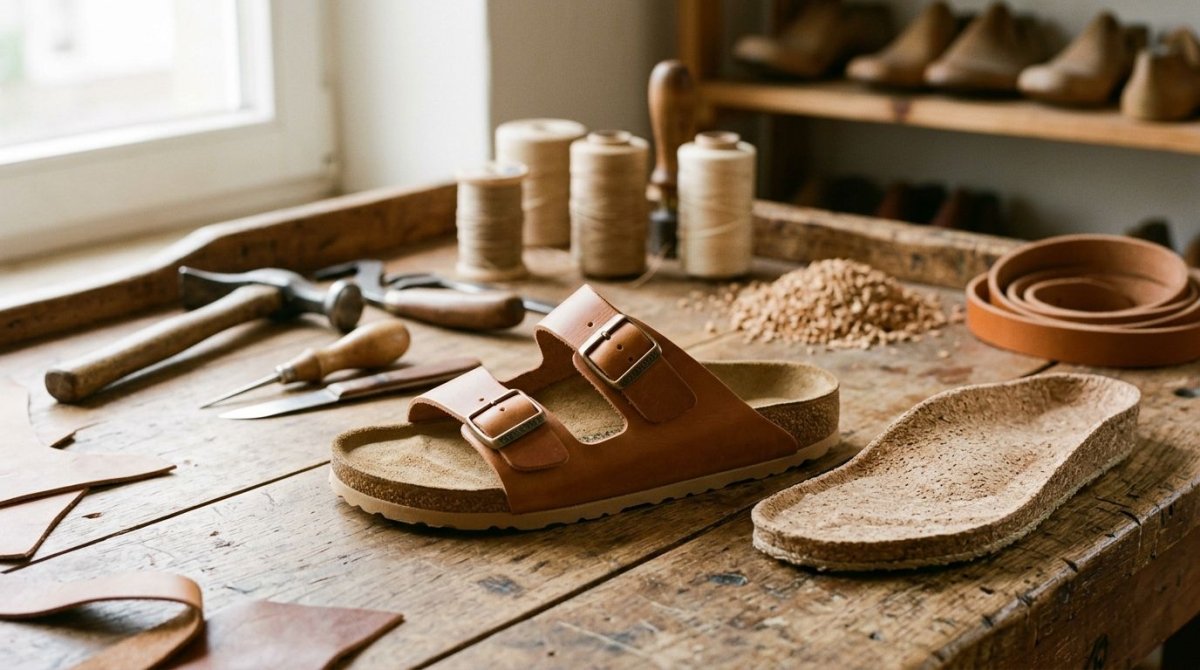
Some shoes feel soft in the store but lose their appeal after a full day. Birkenstock takes a different approach: support comes from a shaped footbed, not only from extra padding.
The Birkenstock footwear history began with a German shoemaking family and a practical question: how should a shoe support the foot? Over generations, that question led to the cork-latex footbed, adjustable sandal straps, and recognizable models shoppers still wear today.
Understanding the design makes it easier to choose between an Arizona, Madrid, or Boston, and to know what a proper break-in should feel like.
Birkenstock footwear history, from family craft to footbed design
The brand's story began in Germany and developed around foot-shaped insoles before Birkenstock became known for sandals. That focus still defines the fit today.
From a shoemaker's workshop to contoured insoles
Johann Adam Birkenstock appears in German church records as a shoemaker in 1774. The family remained connected to shoemaking for generations, but Konrad Birkenstock changed the direction of the business in the late 19th century.
In 1896, Konrad developed a flexible, contoured insole designed to follow the shape of the foot. The family later produced these insoles commercially, giving more people access to structured support inside everyday shoes. By 1925, Birkenstock had expanded production at a factory in Friedberg, Germany.
The important shift was simple. A flat insole became a shaped support system with a defined heel area and contours beneath the arches. That design gave the foot a stable surface inside the shoe.
The Madrid, Arizona, and the rise of recognizable models
Karl Birkenstock introduced the Madrid sandal in 1963. Its single strap and adjustable buckle gave the contoured footbed a simple, open design. Margot Fraser discovered Birkenstock sandals while visiting Germany and brought the brand to the United States in 1966.
The Arizona followed in 1973 with two adjustable straps. Its broader upper gave shoppers more control over the fit, while the footbed retained the same anatomical shape. Later, the Boston carried the design into a closed-toe clog.
The early Birkenstock footwear history explains why the brand's most familiar models still look straightforward. The upper changes, but the footbed remains the central feature.
How Birkenstock's signature footbed supports the foot
Birkenstock comfort comes from several parts working together. The footbed doesn't rely on a thick layer of soft foam to create its feel.
A deep heel cup and shaped arches
The footbed includes a deep heel cup that helps position the heel in the center of the shoe. Raised edges around the heel also provide a more contained feel than a completely flat sandal.
Under the middle of the foot, the longitudinal arch support follows the inside length of the foot. A transverse arch support crosses beneath the forefoot. Together, these contours create a stable platform under areas that receive pressure during walking.
Because the support is built into a cork-latex base, a new pair can feel firmer than a foam sneaker. That firmness is part of the construction. Shoppers who prefer soft cushioning should compare the shape and stability of the footbed, not only the amount of initial softness.
Toe bar, roomy fit, and natural movement
A raised toe bar sits beneath the toes. It gives the toes a defined point of contact and supports the foot's natural gripping motion while walking. The toe area also has a rounded shape that allows the toes to spread more freely than they can in a narrow, pointed shoe.
Width matters as much as length. Birkenstock offers different width options on many models, including regular and narrow fits. A narrow foot in a regular footbed may slide, while a wider foot in a narrow footbed may press against the sides.
Adjustable straps can fine-tune the upper, but they can't correct the wrong width. A properly chosen pair should leave room around the toes and keep the arch contours beneath the foot.
A well-fitting Birkenstock should feel supportive under the arches while leaving space for the toes. The buckles should secure the foot without squeezing it.
Materials that shape the comfort experience
The footbed provides the structure, while the upper, lining, and outsole affect how the shoe feels in daily use. Choosing the right materials can make a noticeable difference.
Original footbed, soft footbed, and EVA soles
The traditional footbed uses a cork-latex core with a suede lining. With regular wear, the cork-latex blend develops a personal wear pattern and becomes more familiar underfoot.
The Soft Footbed version adds a layer of foam to the original footbed construction. It gives the shoe a cushioned feel without removing the heel cup, arch supports, or toe bar. Someone who wants the classic firm feel may prefer the original footbed, while a shopper who wants extra cushioning may find the Soft Footbed more comfortable at first.
The outsole is usually made from EVA, a lightweight material that provides flexibility and shock absorption. It keeps sandals and clogs from feeling unnecessarily heavy during everyday walking.
For example, the men's Arizona soft footbed sandals combine the Arizona's two-strap design with extra cushioning and a black oiled nubuck upper.
Leather, suede, and synthetic uppers
Leather uppers develop character with wear and can provide a more substantial feel. Oiled leather and oiled nubuck often show changes in color and texture over time, so small marks may become part of the shoe's appearance.
Suede has a softer, napped surface and a more relaxed look. It can require more careful cleaning, especially in wet weather. A suede brush helps remove surface dirt, but each model should follow its recommended care instructions.
Synthetic uppers offer another choice. They provide a consistent appearance and suit shoppers who prefer a leather alternative. The women's Arizona Birko-Flor sandals pair a black synthetic upper with the familiar contoured cork-latex footbed.
The upper material changes the look and maintenance routine, but it doesn't replace the footbed's core support. Width, length, and footbed type deserve attention before color or finish.
Which Birkenstock model fits your routine?
The main models share the same support principles, yet their coverage and adjustability suit different wardrobes. Consider where you'll wear the shoes before choosing the silhouette.
| Model | Design | A good choice for |
|---|---|---|
| Women's Madrid sandals in black | One broad strap | A low-profile sandal with a simple, adjustable upper |
| Women's Arizona Birko-Flor sandals | Two adjustable straps | Everyday wear when you want more control over the fit |
| Men's Boston soft footbed clogs | Closed toe with an open back | Cooler weather and outfits that need more coverage |
The Madrid has the cleanest design, but its single strap gives you one main adjustment point. It works well for shoppers who prefer a minimal sandal and don't need as much upper coverage.
Arizona sandals offer more flexibility because the two straps can be adjusted separately. That helps when the forefoot and instep need different amounts of room. The design also works with casual clothing, travel outfits, and warm-weather layers.
Boston clogs cover the toes while leaving the heel open. They can be worn with or without socks, depending on the season and personal preference. The Soft Footbed version adds a foam layer beneath the suede lining for a cushioned feel.
How to choose and break in Birkenstocks
A good fit should feel supportive, but it may not feel familiar on the first day. Take time to assess the shape before deciding whether the shoe works for you.
Check the fit before judging comfort
Try the shoes while wearing the socks you expect to use. If you'll wear sandals barefoot, check the fit without socks as well. Your heel should sit inside the heel cup, and your toes shouldn't touch the front edge.
The sides of your foot should remain within the footbed borders. Your toes need room to move, while the arch supports should sit beneath the arches rather than behind them or directly under the heel.
Adjust the straps until they hold the foot in place without creating pressure across the instep. You shouldn't need to overtighten a buckle to stop your foot from sliding. If the footbed feels too narrow or your toes reach the edge, try a different size or width instead.
People who use prescription orthotics should ask their podiatrist whether a stock contoured footbed suits their needs. Birkenstock's built-in support may not work with every orthotic setup.
Start slowly and care for the footbed
Wear a new pair at home for short periods before taking it on a full day of walking. The footbed can feel firm and structured at first, especially if you're used to flexible sneakers. Add wear time gradually as the shape becomes more comfortable.
A stiff sensation can improve with use, but sharp pressure, numbness, or repeated rubbing indicates a fit problem. Changing the strap position may help minor friction. Persistent discomfort usually calls for a different size, width, or model.
Keep cork, leather, and suede away from soaking rain whenever possible. If the shoes get wet, let them air-dry at room temperature and keep them away from radiators or direct heat. Strong heat can damage leather and dry out the cork.
Clean the upper according to its material. Use a suede brush for suede, a suitable leather product for leather, and the care method recommended for synthetic materials. Cork sealer can help protect exposed cork edges when the finish begins to wear.
Conclusion
The lasting lesson in Birkenstock footwear history is that comfort can come from shape, not only softness. The heel cup, arch supports, toe bar, cork-latex core, and adjustable straps give the foot a stable foundation.
When shopping, start with width and footbed type. Then choose the upper material and model that match your routine, whether that's a single-strap Madrid, adjustable Arizona, or closed-toe Boston. A thoughtful fit turns the brand's long shoemaking tradition into comfort you can use every day.


