

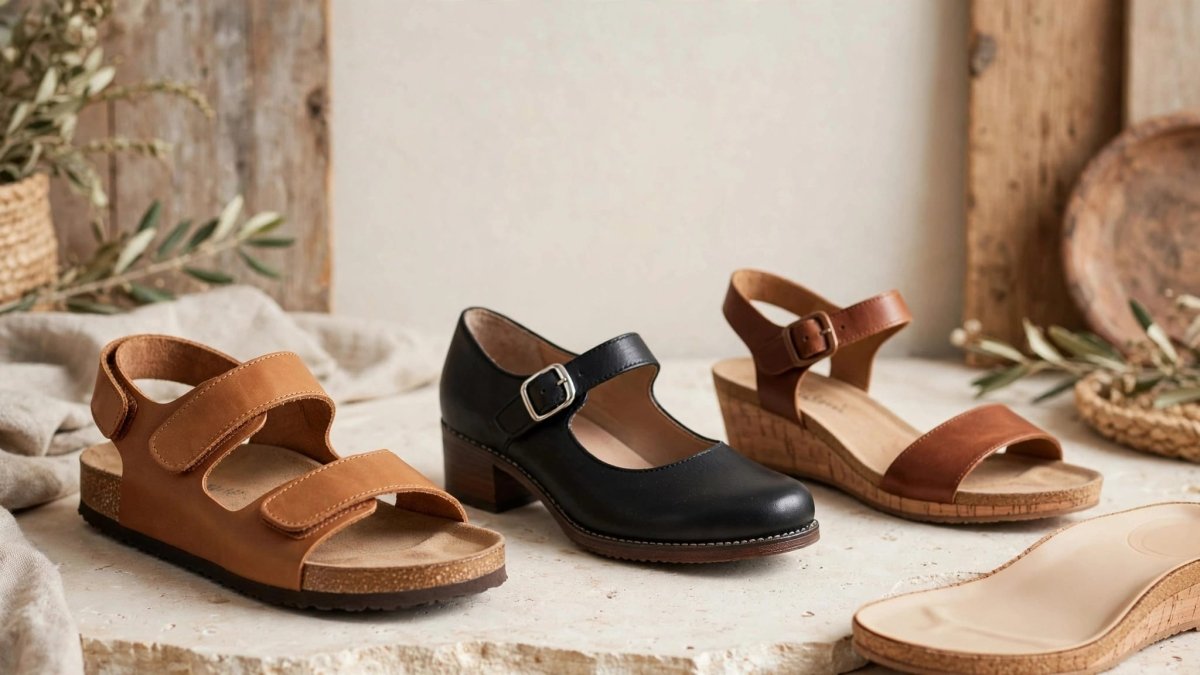
A comfortable shoe has to do more than feel soft in the first few minutes. Naot footwear combines a long manufacturing history with an anatomic cork-and-latex footbed designed to support daily movement.
The brand offers adjustable sandals, closed-toe shoes, wedges, and styles with removable footbeds. However, construction varies by model, so shoppers should compare the specific straps, sole, heel height, and footbed details before choosing a pair.
Naot's History Began in a Kibbutz Workshop
From a one-room workshop to an international brand
Naot began in 1942 as a one-room workshop on Kibbutz Naot Mordechai in Israel's Hula Valley. The company built its reputation around practical footwear, careful construction, and designs intended for regular wear.
That origin still matters because Naot's identity is tied to its manufacturing background rather than a short-lived fashion trend. The brand later expanded production to meet demand in additional markets, while keeping its Israeli roots central to its story.
Over time, Naot developed a broad collection that included sandals, casual shoes, clogs, boots, and dressier styles. Its anatomic footbed became one of the brand's most recognizable features.
Where Naot shoes are made
Naot footwear is not made exclusively in Israel. Current brand information identifies production in Israel, Portugal, and Mexico. The company's Japanese site also describes Israeli and Palestinian workers employed together in Israel.
That distinction is useful when shopping. A brand's origin story and the manufacturing location of a particular pair are related, but they aren't always the same thing. Product pages provide the clearest information about each style's materials and construction.
What Makes the Naot Anatomic Footbed Different?
Cork, latex, and suede work together
Naot's Scandinavian Footbed is removable, anatomic, and made with cork and latex. A suede covering sits against the foot. The men's Executive Footbed uses the same basic construction.
Cork provides a structured base, while latex adds a more resilient layer beneath the suede surface. With wear, the footbed is designed to adapt to the shape of the foot. That process can make the shoe feel more personalized over time, although the experience varies with foot shape, size, and the individual model.
The word "anatomic" describes the shape and construction of the footbed. It doesn't mean every Naot style will suit every foot or correct a medical condition. Shoppers with persistent foot pain should follow advice from a qualified medical professional.
Removable footbeds offer added flexibility
A removable footbed can make a shoe easier to maintain and may allow replacement when the original insert wears down. Still, removability is not universal across every Naot product, so check the individual description.
The Naot Kawhia, for example, has a removable anatomic cork-and-latex footbed and works with Naot's patented replacement footbeds. It also uses a one-inch polyurethane sole and hand-sewn Strobel construction, which adds flexibility to this closed-toe design.
The footbed matters, but comfort also depends on the shoe's width, upper, straps, heel height, and the way your foot moves.
Naot Footwear Styles for Everyday Wear
Naot's collection covers more than one type of comfort shoe. The right option depends on where you plan to wear it and how much adjustability you need.
Adjustable sandals for warm-weather walking
The Naot Kayla black leather sandals use three straps, an adjustable hook-and-loop instep closure, and a backstrap. The sandal has a 1.5-inch heel and an anatomic cork-and-latex footbed wrapped in suede.
That combination suits shoppers who want an open sandal with a more secure feel than a simple slip-on. The backstrap can help keep the sandal in place, while the adjustable instep strap allows some control over the fit.
The Naot Dorith black leather sandals offer another adjustable option. Their gladiator-inspired design includes an ankle strap, backstrap, and suede-covered cork-and-latex anatomical footbed.
Closed-toe choices for regular routines
Sandals work well in warm weather, but many shoppers need coverage for commuting, errands, travel, or indoor work. The Naot Kawhia removable-footbed shoes provide a closed-toe alternative with a breathable vegan knit upper and lightweight polyurethane sole.
The hand-sewn Strobel construction is designed for flexibility, while the removable footbed gives the shoe a practical advantage for continued use. Its taupe color also works with casual outfits without looking like athletic footwear.
Wedges and dressier designs
Comfort footwear doesn't have to look strictly utilitarian. The Naot Starlet black leather sandals use multiple straps and a 1.75-inch sole. The style belongs to Naot's Fantasy Collection and pairs a dressier silhouette with a suede-wrapped cork-and-latex footbed.
For a more dramatic warm-weather look, the Naot Summer Raffia platform sandals combine black leather with raffia detailing. The design has an adjustable hook-and-loop strap, anatomic footbed, and lightweight TPR outsole that creates the appearance of a 2.75-inch wedge.
How to Choose a Naot Style for Daily Use
Start with the details that affect fit
Begin with the footbed. Decide whether you want a removable design, then check whether the product page identifies an anatomic cork-and-latex construction. Next, look at the closure.
Hook-and-loop straps allow more adjustment than fixed straps. Backstraps can provide a more secure feel, especially when you're walking for long periods. Multi-strap sandals distribute contact across more of the foot, but the arrangement may feel different depending on your instep and toe shape.
Also consider the sole. A lightweight polyurethane sole may suit everyday walking, while a TPR outsole or wedge profile may better match a dressier wardrobe.
Match the shoe to your routine
A low, adjustable sandal may be a practical choice for local errands and summer travel. A closed-toe knit shoe can work better for transitional weather, indoor work, or days when you want more coverage.
Heel height deserves equal attention. The Kayla has a 1.5-inch heel, Starlet has a 1.75-inch sole, and Summer Raffia creates the look of a 2.75-inch wedge. These differences affect the shoe's appearance and the way it feels during extended wear.
Try shoes later in the day if possible, when feet may be slightly larger. Wear the socks or hosiery you expect to use, and make sure your toes aren't pressed against the front of the shoe.
Product Guide: Comparing Popular Naot Styles
The following styles show how much construction can vary within the brand.
| Naot style | Main design details | Footbed and sole details |
|---|---|---|
| Kayla | Three straps, instep closure, backstrap | Anatomic cork and latex, 1.5-inch heel |
| Dorith | Gladiator-inspired sandal, ankle strap, backstrap | Suede-covered cork and latex footbed |
| Starlet | Multi-strap sandal with dressier shape | Suede-wrapped anatomic footbed, 1.75-inch sole |
| Kawhia | Closed-toe vegan knit shoe | Removable footbed, 1-inch polyurethane sole |
| Summer Raffia | Leather and raffia platform sandal | Anatomic footbed, lightweight TPR outsole |
| Marbella | Brown leather sandal with wood accent buckle | Anatomic footbed, EVA sole with a 3-inch wedge look |
The Naot Marbella brown leather sandals are suited to shoppers who want a dressier sandal without choosing a traditional high heel. The Costal Collection design uses padding, a wood accent buckle, and an EVA sole that gives the appearance of a three-inch wedge.
These examples show why the Naot name alone doesn't tell you everything about a shoe. The individual style determines the closure, materials, sole, heel profile, and whether the footbed comes out.
Key Takeaways for Naot Shoppers
- Naot began in 1942 at Kibbutz Naot Mordechai in Israel's Hula Valley.
- The brand's production includes Israel, Portugal, and Mexico.
- Its signature Scandinavian Footbed uses cork and latex with a suede covering.
- Some models have removable footbeds, while others require a style-specific check.
- Adjustable straps and backstraps can provide a more secure fit in sandals.
- Heel and sole profiles vary widely, from the 1-inch Kawhia sole to wedge-inspired sandals.
- An anatomic footbed supports a shoe's design, but it doesn't guarantee comfort for every foot.
Frequently Asked Questions About Naot Footwear
Is Naot footwear made in Israel?
Naot began in Israel, and the brand continues to produce footwear there. However, current brand information also identifies Portugal and Mexico as manufacturing locations. Check the product information or labeling for details about a specific pair.
What is a Naot anatomic footbed made of?
Naot's Scandinavian Footbed is made with cork and latex and covered in suede. It is removable and shaped as an anatomic footbed. The men's Executive Footbed uses the same stated material structure.
Do all Naot shoes have removable footbeds?
No. Removability varies by style. The Kawhia has a removable footbed and is compatible with Naot's patented replacement footbeds. Other models may use a fixed footbed, so review each product description before buying.
Are Naot sandals suitable for all-day wear?
Several Naot sandals include features intended for extended everyday use, such as anatomic footbeds, adjustable straps, and backstraps. However, comfort depends on the shoe and the wearer. Start with the model's fit, heel height, sole, and upper rather than assuming every style will feel the same.
Conclusion
Naot's story begins with a small 1942 workshop, but the brand's everyday appeal comes from details you can inspect in each shoe. Cork-and-latex footbeds, suede coverings, adjustable straps, removable inserts, and varied sole designs give shoppers several ways to find a suitable fit.
The best choice depends on your routine and the construction your feet prefer. Whether you choose an adjustable sandal, a closed-toe knit shoe, or a dressier wedge, compare the exact model before bringing it into your daily rotation.


