

Heel-to-toe drop is one shoe specification, but it can't tell you whether a pair has the right length or width. For fit, prioritize toe room, secure heel hold, and comfortable contact across your instep.
A number on a product page can't describe every detail of how a shoe accommodates your foot. Start by separating construction measurements from the fit features you can assess when trying shoes on.
Key Takeaways
- A drop specification doesn't provide a shoe-size conversion or describe toe-box width.
- Heel height and platform height are separate measurements; neither should automatically be read as drop.
- Lacing, footbed shape, and interior space deserve attention alongside any numerical specification.
Read Heel-to-Toe Drop Alongside Other Shoe Details
Shoe listings describe several measurements, and their labels matter. A heel-height figure, platform measurement, and heel-to-toe drop specification aren't interchangeable.
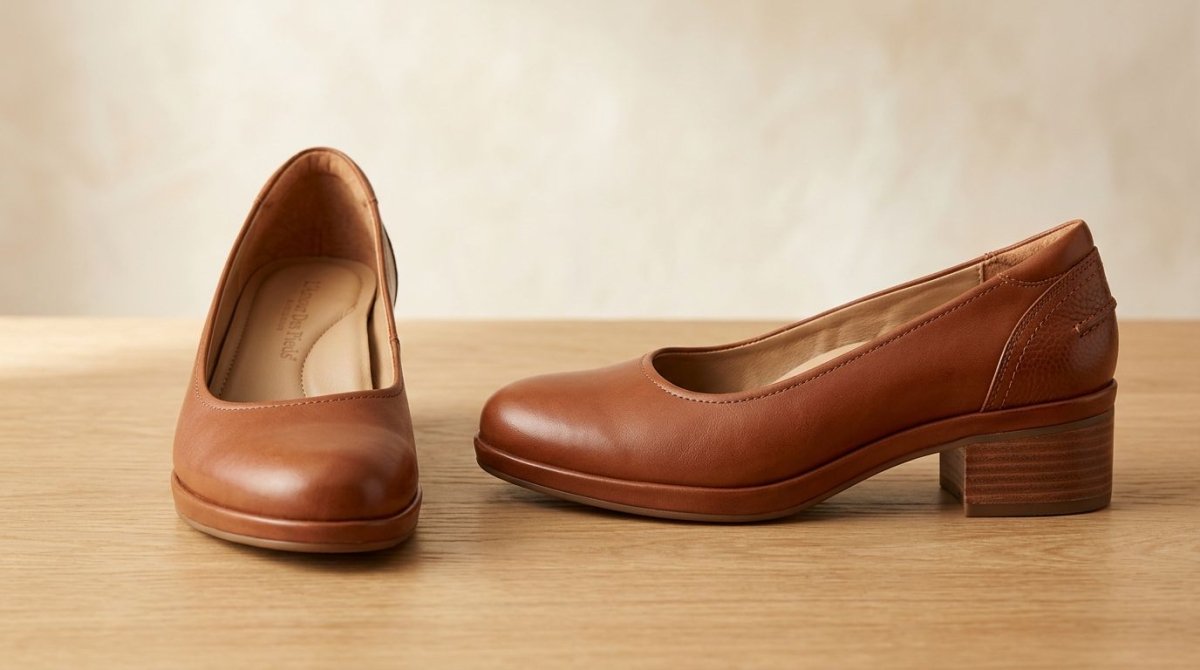
For example, our L'Amour Des Pieds Orva shoes list a 2.75-inch heel and a 0.25-inch platform. Those figures describe the heel and platform. Neither is a stated drop measurement.
The Orva also has an adjustable hook-and-loop strap. That's a separate fit feature because it lets you adjust how securely the upper holds your foot.
When comparing shoes, keep these categories separate: construction measurements describe the shoe, while closures and interior shape help determine how it fits you. Choosing a larger size based on a drop number alone isn't a reliable sizing method.
Judge Fit Where Your Foot Meets the Shoe
The most useful fit information comes from how the shoe accommodates your foot while standing and walking.
Give Toes Room Without Losing Heel Hold
For closed-toe walking shoes, aim for roughly 3/8 to 1/2 inch between your longest toe and the shoe's end. Your longest toe may be your second toe.
Width matters separately. Your toes should rest without crowding, and the sides shouldn't squeeze the ball of your foot. A rounded-looking toe doesn't guarantee enough interior space.
Meanwhile, your heel should feel secure without painful rubbing. If sizing up solves toe pressure but creates excessive heel movement, try a different width or shoe shape. Extra length won't reliably solve a width problem.
Watch Instep Pressure and Footbed Shape
The instep is the upper part of your foot beneath the laces, straps, or vamp. Pressure here can make an otherwise roomy shoe uncomfortable.
Adjust the closure before rejecting a size. However, a shoe that still digs into your instep may have insufficient interior depth for your foot.
Also notice where the footbed's contours meet your arch and heel. Support should feel comfortable rather than intrusive. Cushioning doesn't compensate for a poorly placed contour, and a higher price doesn't guarantee a better match.
Choose Fit Features You Can Adjust
A shoe's closure and removable components give you practical ways to accommodate your feet. Consider these alongside its sole specifications.
Use Lacing to Refine the Hold
Our Mephisto Match walking shoes combine full-grain leather with speed lacing and a padded tongue and collar. These are useful details when comparing walking shoes.
Lacing lets you adjust tension across the upper. Loosen it where you feel pressure, then secure the shoe enough to limit unwanted movement.
However, adjustment has limits. If you must pull the sides tightly together to hold your heel, the shoe may have too much interior volume. Likewise, leaving the laces extremely loose doesn't resolve an upper that's too shallow.
Account for Removable Footbeds
Our ECCO Turn waterproof shoes include a removable leather-covered inlay sole. That feature matters if you use an insert that replaces the original footbed.
Bring your usual orthotics when trying shoes on. An insert occupies interior space, so assess toe room, instep pressure, and heel hold with it inside.
Don't automatically stack an orthotic over the existing footbed. Added thickness can crowd your foot or position your heel too high against the collar. Follow your clinician's instructions for prescribed devices, and assess the complete shoe-and-insert combination.
Try Shoes Under Everyday Conditions
Wear the socks you expect to use with the shoes. Thick walking socks and thin dress socks occupy different amounts of space.
Try both shoes because your feet may differ in size. If your feet swell during the day, an afternoon fitting can help you assess the room you'll need.
Walk at your normal pace, turn, and pause while standing. Pay attention to toe contact, heel movement, and pressure across the upper.
A little unfamiliarity differs from pain. Don't rely on future stretching to fix pinching or toe crowding. Persistent foot pain deserves assessment by a qualified healthcare professional.
Frequently Asked Questions
Does heel-to-toe drop tell me which size to buy?
No. Choose size through length, width, and an actual fit assessment. The number doesn't translate into a larger or smaller shoe size.
Can a cushioned shoe still fit poorly?
Yes. Soft cushioning doesn't prevent a narrow toe box, insufficient depth, or heel slippage. Judge cushioning and fit separately.
Should every pair I own have the same specifications?
Matching specifications isn't necessary for matching fit. Evaluate each pair for its intended activity, the socks you'll wear, and any inserts you use. Two shoes with similar numbers can still have different interior shapes.
Put Fit Ahead of a Single Number
Heel-to-toe drop belongs among a shoe's specifications, but it can't replace an assessment of length, width, and interior space. Keep heel and platform measurements separate, and give adjustable features their own consideration.
Choose the pair that accommodates your toes, holds your heel comfortably, and works with your everyday socks or inserts. Those are fit details you can feel with every step.


