

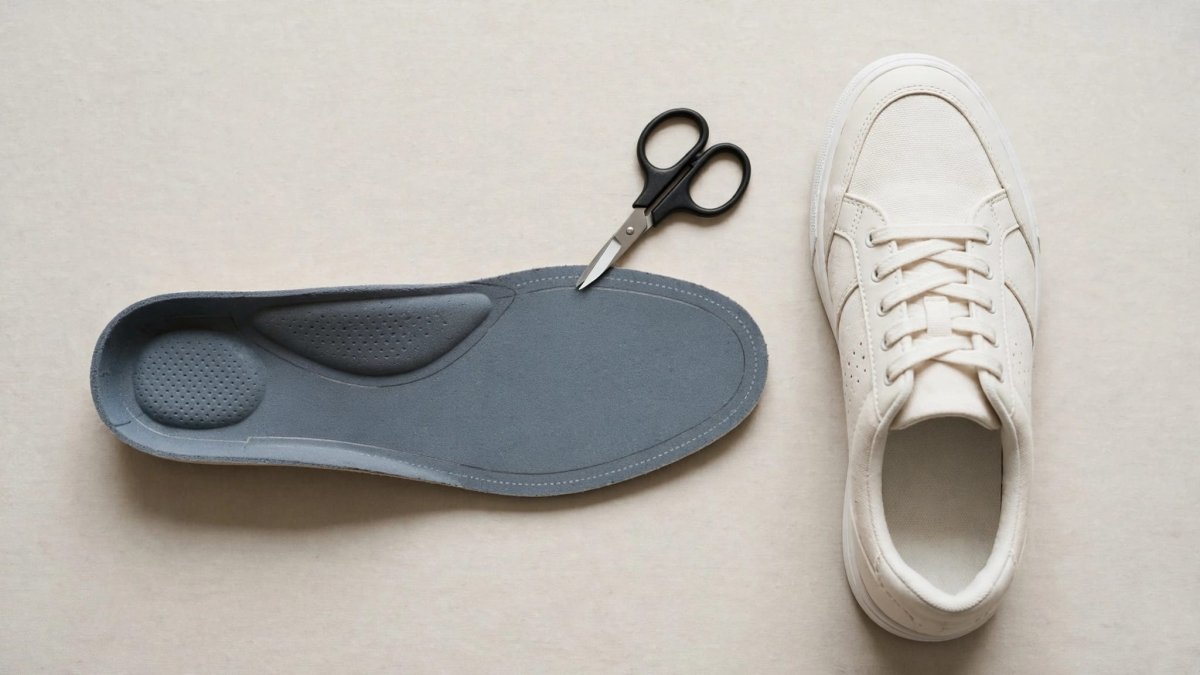
When you trim shoe insoles, start with a model labeled trim-to-fit and preserve its built-in support structure. Trimming cannot correct an arch contour that sits in the wrong place or a heel cup that doesn't suit your foot.
The important distinction is between adjusting the fit and changing the features that support you. An insole can fit inside a shoe yet still feel wrong underfoot.
Before making an irreversible adjustment, consider the insole's design, your foot's position, and the space inside your shoes.
Key Takeaways
- Choose an insole designed for trimming rather than assuming every removable footbed is adjustable.
- Keep the heel cup, arch contour, and stabilizing structure intact.
- Select the right size range first, because shortening an insole won't relocate its support.
- Consider shoe depth and width alongside insole length.
A successful fit depends on the whole combination: your foot, the insole, and the shoe. An adjustment to one part cannot compensate for every mismatch elsewhere.
What Trim-to-Fit Insoles Can and Cannot Change
Length and support are different features
A trim-to-fit insole offers a way to adapt its overall fit to footwear. However, its support comes from a shaped structure that already exists before any adjustment.
For example, our Superfeet Blue trim-to-fit insoles combine a deep heel cup, a shaped profile, and a reinforced stabilizer cap. Those features have different jobs than the cushioning beneath your toes.
The trim-to-fit label doesn't mean every part of the product is equally adjustable. It also doesn't promise that one size or support shape will suit every foot.
Start with an insole that feels appropriately positioned beneath your heel and arch. Otherwise, changing its overall length leaves the original support mismatch unresolved.
Removable doesn't always mean trimmable
A removable footbed is one you can take out of a shoe. That feature makes replacement possible, but it doesn't automatically make the original footbed suitable for trimming.
Some footbeds contain semi-rigid supports, shaped cork, or other structural components. Others are simple cushioning layers. Their appearance alone doesn't establish how they should be altered.
Similarly, a custom orthotic is different from a general-purpose trim-to-fit insert. Its shape may reflect a prescribed correction or accommodation.
Keep prescribed devices unchanged unless the clinician responsible for them recommends an adjustment. A home alteration can change more than the way the device fits inside a shoe.
Protect the Features That Provide Support
The heel cup establishes your starting position
A heel cup forms a shaped seat around the heel. Its fit matters because your heel's position influences where the rest of your foot meets the insole.
If your heel sits awkwardly against the cup or feels crowded, overall length may not be the problem. A different size or design may provide a better match.
Our Superfeet Green trim-to-fit insoles include a deep heel cup, full-length foam, and a reinforced stabilizer cap. The foam provides cushioning, while the shaped components contribute to support.
Keep that distinction in mind when comparing insoles. A soft surface can feel pleasant immediately without telling you whether the heel and arch fit appropriately.
The arch contour and stabilizer work together
The raised contour beneath your arch has a fixed relationship to the heel cup. Changing the insole's overall length doesn't move that contour independently.
Meanwhile, a stabilizer cap reinforces the insole's structure. Treat it as part of the support system rather than excess material.
Look for comfortable contact beneath the arch instead of a concentrated pressure point. More noticeable pressure isn't proof of better support, and a higher contour isn't automatically the right choice.
An insole can match a shoe's length while placing its arch contour incorrectly beneath your foot.
That mismatch calls for a different fit or design. Further alterations cannot reliably turn the wrong support shape into the right one.
Choose the Right Insole Size Before Adjusting Fit
Understand what a size range means
Trim-to-fit insoles often cover more than one shoe size. That allows a single product size to accommodate different footwear lengths, but the underlying support still needs to suit the wearer.
Our Superfeet Berry trim-to-fit insoles list women's shoe-size ranges of 4.5 to 6, 6.5 to 8, 8.5 to 10, and 10.5 to 12.
Those ranges are useful starting points. However, they don't make the fit inside every shoe identical. Toe shape, interior width, and available depth vary between styles.
An insole chosen only because it seems long enough may still feel wrong at the heel or arch. Consider those areas before treating extra length as the only issue.
Separate foot fit from shoe fit
There are two distinct fit requirements. The insole must suit your foot, and the shoe must accommodate both.
A good foot-to-insole match places your heel comfortably within the heel cup. The arch contour should meet your foot without creating a sharp ridge or an uncomfortable lump.
Then consider the footwear. A shoe that feels cramped with the replacement insole may lack enough interior space, even if its stated size is correct.
Avoid choosing a poorly positioned support simply because it slips into the shoe easily. Likewise, don't assume a supportive insole makes an undersized shoe suitable. Both relationships need to work.
Match the Insole to Your Shoe's Interior
Depth matters as much as length
Adding an insole changes how much room remains above and around your foot. A thicker replacement can increase pressure across the instep or crowd the toes.
As a result, a shoe may feel shorter even when the insole's overall length isn't the main problem. Reduced vertical space can make the upper press against your foot.
When replacing a removable factory liner with a full-length insole, avoid automatically stacking both. Extra layers can raise your heel and reduce room throughout the shoe.
Also consider the socks you normally wear. A fitting done in thin socks may not reflect how the same combination feels with thicker everyday or work socks.
Width and fastening affect the result
An insole needs to sit naturally inside the shoe. Persistent buckling, rocking, or curling suggests a mismatch that deserves attention before wear.
The shoe's fastening matters too. Laces and adjustable straps help manage fit, but excessive tightening cannot correct every movement or pressure problem.
If the heel slips after an insole change, consider how high your foot now sits inside the shoe. A raised heel may have less secure contact with the heel counter.
For shoppers who plan to use replacement insoles, removable footbeds and sufficient interior room are useful footwear features. Bring your intended insoles when trying on shoes so you can judge the complete fit.
Know When Trimming Is the Wrong Solution
Built-in footbeds belong to a different category than removable trim-to-fit inserts. Their contours are part of the footwear's construction.
For example, our Birkenstock Arizona soft-footbed sandals have a contoured cork-latex footbed. That footbed adjusts to your foot with wear; it isn't a trim-to-fit replacement insert.
Choose the correct sandal size and width rather than trying to reshape its footbed. Adjustable straps can refine how the upper holds your foot, but they don't change the footbed's dimensions.
The same caution applies when an insole creates a pressure point beneath your arch. Altering a support component to remove that sensation can change the product's intended structure.
Persistent pain, numbness, or skin irritation calls for stopping use rather than continuing to adjust the insole. If you have diabetes, reduced sensation, or circulation problems, seek professional guidance before altering footwear or orthotic devices.
People with prescribed orthotics should also keep adjustments under the care of their treating clinician. These devices may address needs that aren't obvious from their outward shape.
Assess the Fit During Everyday Movement
Standing comfortably is a useful first impression, but walking adds information. Your heel should feel secure, and your toes should have room without persistent rubbing.
Wear the socks intended for those shoes and fasten them normally. Then pay attention to where discomfort appears rather than assuming every unfamiliar sensation is part of an adjustment period.
Pressure across the top of the foot suggests a different fit issue than a distinct lump beneath the arch. Similarly, heel movement and toe crowding need separate attention.
A supportive contour may feel different from a flat factory liner, but pain isn't a fitting goal. Stop wearing the combination if it produces sharp discomfort or numbness.
Also assess each shoe separately. The two sides don't always feel identical, and a comfortable fit on one foot doesn't establish a comfortable fit on the other.
Frequently Asked Questions
Can trimming an insole change its arch support?
It can if the adjustment damages or alters the supporting structure. Even with that structure intact, the insole still needs to sit correctly beneath your foot. A trim-to-fit label isn't a guarantee that every adjustment will preserve the intended fit.
Will a shorter insole move the arch into place?
Shortening an insole doesn't independently relocate its arch contour relative to the heel cup. If that contour feels too far forward or backward, consider a different size or design. Overall length and arch placement are related fitting considerations, but they aren't interchangeable.
Can I move the same insoles between shoes?
Only when the fit works in each pair. Shoes with the same labeled size can have different interior shapes and depths. An insole that sits naturally in one pair may buckle, crowd your toes, or raise your heel excessively in another.
Are thicker insoles always more supportive?
Thickness alone doesn't establish support. Foam can add cushioning, while heel cups, arch contours, and stabilizing components affect structure. A thicker insole can also reduce available shoe space. Choose the combination that fits comfortably rather than using thickness as a shortcut.
Keep Support Intact by Getting the Fit Right
The strongest starting point is a trim-to-fit insole whose heel cup and arch contour already suit your foot. Correct positioning matters as much as fitting the insert inside the shoe.
Treat structural components as support features, and recognize when a different insole or roomier shoe is the better answer. Trimming should never become an attempt to force an unsuitable combination to work.


