

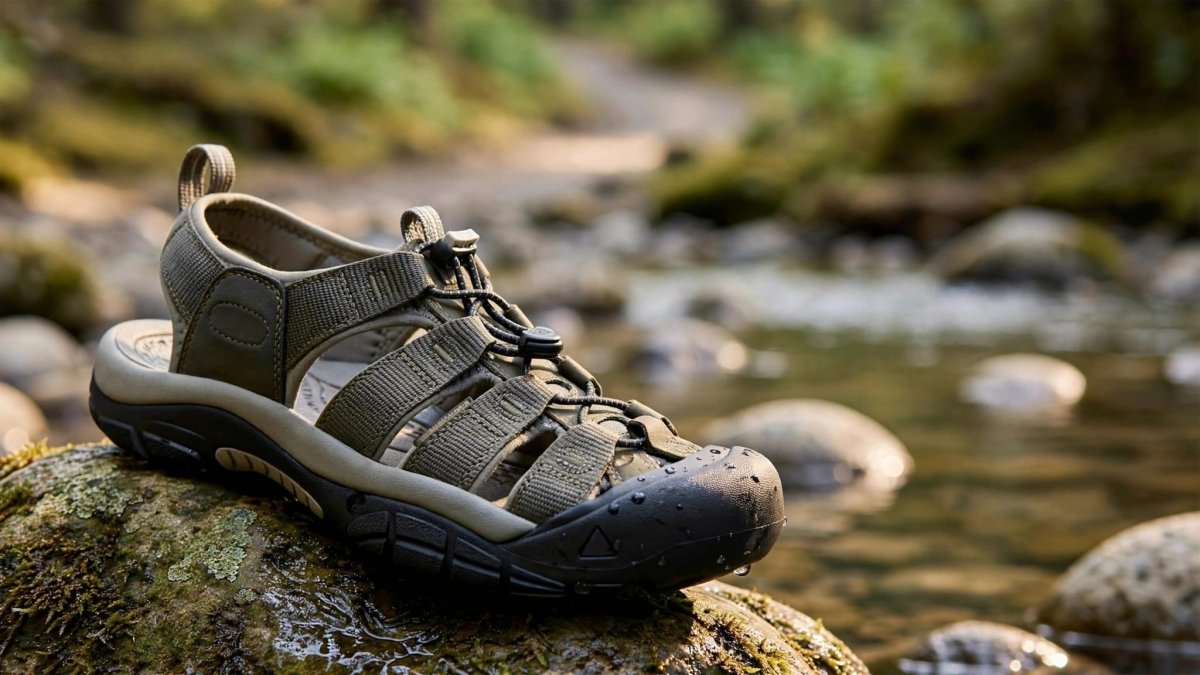
A sandal that protects the toes sounds ordinary today, but it changed how people think about outdoor footwear. The history of KEEN footwear began with a simple question: could one shoe work near the water while still shielding the front of the foot?
That idea led to hybrid shoes for shoppers who want comfort on sidewalks, grip on trails, and more protection than a traditional sandal. The story also helps explain why KEEN shoes still appeal to families, travelers, and everyday outdoor shoppers. Start with the brand's origins, then match the level of coverage to how you plan to wear the shoes.
Keen footwear history: How the brand began
The 2003 founding
KEEN was founded in 2003 by Martin Keen and Rory Fuerst in Alameda, California. From the beginning, the company focused on footwear that combined outdoor function with a more relaxed fit.
The brand's identity took shape around hybrid designs. Instead of separating sandals, casual shoes, and hiking footwear into completely different categories, KEEN connected them through practical details such as roomy forefoot shapes, grippy rubber outsoles, and protective toe coverage.
That approach still defines many of the brand's best-known models. A KEEN shoe may look casual enough for travel, yet include traction and structure for parks, docks, trails, or uneven streets.
Why the Newport became important
KEEN's official history identifies the Newport as its first shoe. Other accounts place the original Newport idea in 1999 in Jamestown, Rhode Island, before the company formally launched in 2003. Those dates describe different parts of the same development story.
The Newport was originally developed for sailors who wanted sandal ventilation without leaving their toes exposed. That use case shaped the design: an open upper, a secure fit, a rubber toe bumper, and an outsole suited to wet surfaces.
This combination made the Newport more than a beach sandal. It became a practical option for people who wanted one pair for water activities, casual walking, travel, and warm-weather errands.
How KEEN uses toe protection in outdoor shoes
A rubber bumper is different from a safety toe
The Newport's front bumper covers the toes with a layer of rugged rubber. It can help against common outdoor hazards such as loose stones, roots, and accidental contact with hard surfaces.
However, a rubber bumper is not the same as a certified safety toe. It doesn't automatically provide the crush or impact protection required for industrial work. If you need footwear for a jobsite, check for the appropriate safety rating and product labeling rather than relying on the appearance of a toe cap.
For everyday outdoor use, the bumper has a different purpose. It adds a useful barrier while keeping the shoe lighter and more flexible than many heavy-duty boots.
Room for the toes affects comfort
Toe protection only helps if the shoe gives your foot enough space to move. KEEN's Original Fit is known for allowing more room across the forefoot, which can make a difference when your feet swell during long walks or warm weather.
A roomy toe area shouldn't mean a loose heel. The Newport combines forefoot space with a secure heel hold and a bungee lace system. When trying on a pair, check that your heel stays in place while your toes can spread naturally.
Toe protection works best when the shoe fits securely behind the foot and leaves the toes enough room to move.
Newport H2 features for water and warm weather
Quick-drying construction
KEEN calls the Newport H2 its original water sandal. The H2 designation indicates that the model is intended for water use, unlike every casual sandal in the wider Newport family.
The Newport H2 uses washable webbing, a quick-drying lining, and a water-ready construction. These details suit lake days, boat decks, splash parks, and vacations where shoes may get wet more than once.
The sandal also uses PFC-free webbing, and KEEN says its footwear is made without PFAS. That statement applies to the brand's material policy, not a claim that every component is free of all chemicals.
Grip for changing surfaces
Wet ground demands more than a textured upper. The Newport H2 has a rubber outsole with multi-directional traction and razor siping, which helps the sole maintain contact across changing surfaces.
That grip can be useful on damp pavement, boardwalks, rocky paths, and boat surfaces. Still, no outsole makes every surface safe. Smooth algae-covered rocks, steep mud, and icy ground require more caution and footwear designed for those conditions.
The sandal is also washable, which makes maintenance easier after mud, sand, or saltwater exposure. Rinse away grit and let the shoes dry fully before storing them.
Targhee IV for trails and greater coverage
Waterproof protection for cooler conditions
The Newport suits warm, wet conditions, but it leaves more of the foot exposed than a hiking shoe. For colder weather, rougher trails, or extended walking, a mid-height shoe offers more coverage.
The Targhee IV Mid Waterproof uses KEEN.DRY waterproofing, which the brand describes as waterproof and breathable. It also includes Luftcell cushioning and a KEEN.RUGGED outsole for outdoor traction. KEEN states that the KEEN.RUGGED rubber is twice as abrasion-resistant as standard rubber.
The official Targhee IV Mid Waterproof listing showed a $190 price, though prices can change. Shoppers looking for a current retailer option can view the KEEN Targhee IV Mid waterproof hiking shoes at Tip Top Shoes.
How it compares with the Newport
The Targhee IV Mid covers the ankle and uses a waterproof membrane, so it makes more sense for wet trails, cooler temperatures, and longer hikes. The Newport H2 offers better ventilation and easier water use.
Neither model is the universal choice. The right option depends on whether you value open airflow and quick drying or weather protection and added coverage.
| Feature | Newport H2 | Targhee IV Mid Waterproof |
|---|---|---|
| Main use | Water activities and warm-weather walking | Hiking and wet-weather outdoor use |
| Coverage | Low, open sandal design | Mid-height hiking shoe |
| Water handling | Washable and quick drying | KEEN.DRY waterproof membrane |
| Toe feature | Rubber toe bumper | Enclosed outdoor shoe design |
| Traction | Multi-directional, razor-siped rubber | KEEN.RUGGED rubber outsole |
| Best fit for | Travel, docks, parks, and casual walks | Trails, rain, and extended outdoor wear |
The key difference is coverage. The Newport protects the front of the foot while staying open, whereas the Targhee protects more of the foot from weather and trail debris.
Picking everyday outdoor shoes by activity
City walking and travel
For travel, a shoe often needs to handle more than one setting. You may wear it through an airport, on pavement, near water, and across a park during the same trip.
A Newport H2 works well when warm-weather ventilation and easy cleaning matter most. Its toe bumper adds protection without making the shoe look like a heavy boot. The secure lace system also helps during long days when you don't want to keep adjusting your footwear.
KEEN's Jasper Zionic is another option for shoppers who want a closed shoe with a more casual appearance. The KEEN Jasper Zionic Oak Buff shoes list a 12.63-ounce weight per shoe, a 12 mm heel-to-toe drop, a removable foam insole, and 4 mm multi-directional lugs.
Those details make the Jasper Zionic worth considering for light trails, daily walking, and travel where a sandal feels too open.
Trails, rain, and uneven ground
For regular hiking, choose coverage based on the environment rather than style alone. A waterproof mid shoe makes more sense when rain, cold ground, and muddy paths are common.
Look for a stable heel, enough forefoot room, a rubber outsole with defined lugs, and a construction that matches the expected moisture. Waterproof shoes can keep water out, but they may feel warmer than sandals and take longer to dry if water gets over the collar.
The Targhee line is better suited to this use than the Newport. For short park walks, however, it may provide more structure than you need.
Children's outdoor shoes and protected toes
Seacamp II CNX for active preschoolers
Children often need a shoe that can handle water, playgrounds, grass, and quick changes between indoor and outdoor spaces. The KEEN Seacamp II CNX uses washable polyester webbing, a quick-drying lining, and a lace-lock bungee system with an adjustable hook-and-loop strap.
Its EVA footbed provides arch support, while the non-marking rubber outsole uses multi-directional lugs for traction. The design also includes PFC-free durable water repellent. Tip Top's product information listed the preschool Seacamp II CNX at $60, although product availability and pricing can change.
For young children, the practical advantages are easy cleaning, a secure closure, and a toe area that adds a layer of protection during play.
Newport and Targhee choices for older children
The Newport H2 extends the water-sandal concept to kids. The KEEN Boys Newport H2 water-friendly shoes feature a generous forefoot, quick-cinch bungee lacing, a hook-and-loop strap, and a protective toe bumper.
For wet trails or cooler days, the grade-school waterproof Targhee hiking boots offer a more enclosed fit, KEEN.DRY waterproofing, and multi-directional traction.
Parents should check heel security, toe room, and closure adjustment before buying. A child needs space to grow, but too much extra length can cause tripping and heel movement.
What to check before buying KEEN outdoor shoes
Use the following points when comparing models:
- Toe coverage: Decide whether you need a rubber bumper, an enclosed toe, or certified safety protection for work.
- Fit: Make sure the heel stays secure while the forefoot has enough room for natural movement.
- Water needs: Choose quick-drying construction for frequent water use and waterproof construction for rain and wet trails.
- Traction: Look for outsole patterns that match the surfaces you use most often.
- Maintenance: Washable uppers are useful for children, beaches, muddy parks, and frequent travel.
- Coverage: Open sandals keep feet cooler, while mid-height shoes block more debris and weather.
- Weight: A lighter shoe may feel better for travel, while a sturdier hiking shoe can provide more support over rough ground.
The best choice usually becomes clear after you identify the surface, weather, and amount of protection you expect.
Key takeaways
- KEEN began in 2003 with Martin Keen and Rory Fuerst in Alameda, California.
- The Newport introduced a water-friendly sandal with a protective rubber toe bumper.
- A toe bumper helps with everyday outdoor contact but isn't a certified safety toe.
- Newport H2 suits warm, wet conditions and uses washable, quick-drying materials.
- Targhee IV Mid Waterproof provides more coverage for rain, trails, and cooler weather.
- Seacamp II CNX gives children quick-drying materials, secure closures, and outdoor traction.
- Fit matters as much as protection. Keep the heel secure and allow comfortable toe movement.
Frequently asked questions
What is the main idea behind KEEN footwear history?
The central idea is hybrid footwear. KEEN developed shoes that combine features from sandals, casual footwear, and hiking shoes, with the Newport placing toe protection into a water-friendly design.
Does a KEEN toe bumper count as a safety toe?
No. A rubber toe bumper helps shield the toes from everyday bumps and outdoor debris, but it isn't the same as a certified steel, alloy, or composite safety toe. Check product ratings for workplace requirements.
Are Newport H2 shoes good for hiking?
They can work for light hiking, parks, water trails, and warm-weather walks. For rocky trails, cold conditions, heavy rain, or longer hikes, a closed hiking shoe such as the Targhee IV Mid Waterproof offers more coverage.
How should KEEN water shoes be cleaned?
Follow the product care instructions, but washable KEEN models can generally be rinsed after exposure to mud, sand, or saltwater. Remove loose debris and let the shoes dry completely before wearing or storing them.
Choosing the right balance of comfort and protection
The Keen footwear history began with a practical problem: outdoor shoes needed to protect toes without losing the freedom of a sandal. That principle still guides the difference between the Newport, Targhee, Jasper, and children's Seacamp models.
For warm water activities, choose the Newport H2. For wet trails and cooler weather, choose the Targhee IV Mid Waterproof. Once you match coverage, traction, and fit to your routine, toe protection becomes a useful part of everyday comfort rather than a feature chosen by appearance alone.


