

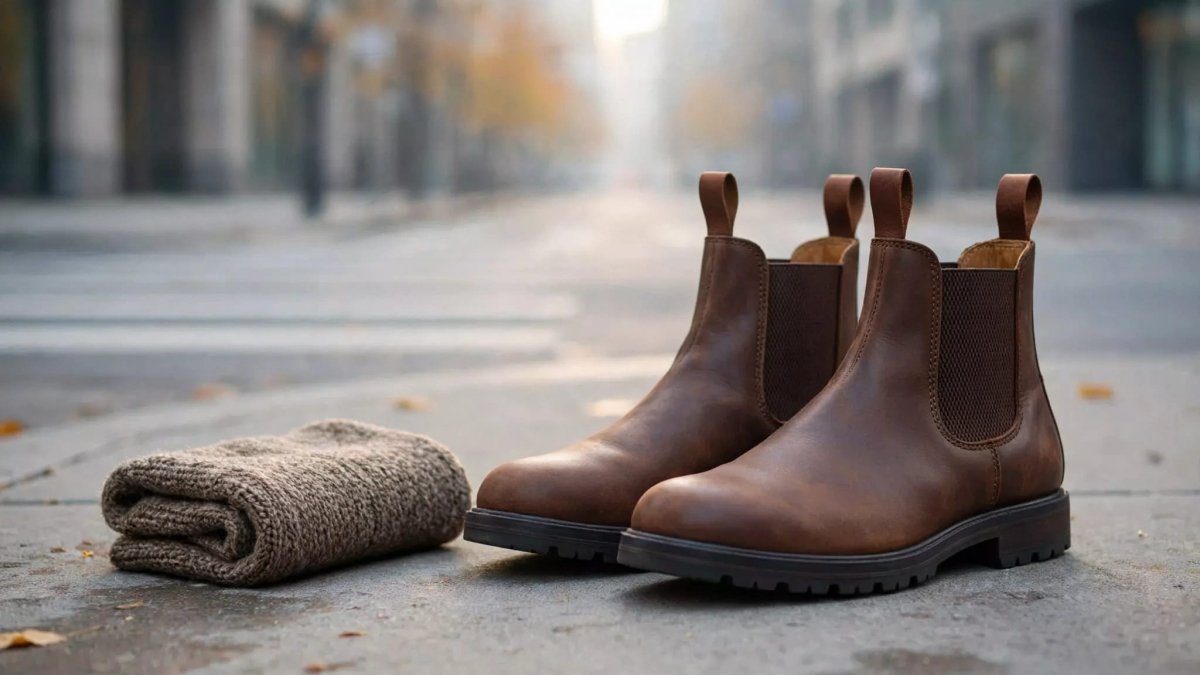
A Chelsea boot that feels fine for ten minutes can become miserable halfway through a long day downtown. Blundstone boot sizing needs a little more thought when you plan to wear thick socks, walk several miles, and move between cold sidewalks and heated buildings.
The good news is that Blundstones have a practical fit system. Their half sizes add width rather than length, which helps many shoppers make room for thicker socks without choosing a boot that feels too long.
Start with your usual measured size (our women's size chart is a good starting reference), then assess your sock choice, foot width, and daily walking routine.
Start With the Shape of Your Foot
Blundstone boots should feel secure at the heel, easy across the instep, and roomy enough to move your toes. They aren't meant to grip your foot like a running shoe, yet they also shouldn't slide around with each step.
Because the leather softens and molds to your foot over time, don't buy a pair that already feels loose. The leather may relax, but a too-long boot won't become stable after break-in.
Understand What Blundstone Half Sizes Do
Blundstone uses Australian and UK sizing, so check the brand's conversion chart rather than relying on the number printed in another boot brand. For example, a men's US 9 generally corresponds to an AU/UK 8, while a women's US 8 corresponds to an AU/UK 5.
The key detail is the half size. A Blundstone half size is designed for a wider fit, not added length. If the standard size gives you adequate toe length but feels tight over the forefoot or instep, the half size is usually the better direction.
Moving up a full size changes both the width and the length. That may help a genuinely longer foot, but it can create heel lift for someone who only needs more volume.
Check Toe Space Before You Judge Comfort
Stand with both boots on and let your toes spread. You should have a small amount of empty space ahead of your longest toe, without your foot sliding forward.
Then walk on a hard floor. A little new-boot stiffness is normal. Pinching at the little toe, pressure on the top of the foot, or a heel that repeatedly rises are fit issues, not problems to wait out.
Thick socks need room around the foot's circumference. They don't automatically require a longer boot.
Blundstone Boot Sizing for Thick Socks
Thick socks change more than warmth. Dense merino, hiking socks, and cushioned winter socks take up space across the forefoot, heel, and instep. That extra volume can make an otherwise correct boot feel one size too small.
For Blundstone boot sizing with thick socks, use the sock you expect to wear most often during cold weather. Trying boots in thin dress socks, then switching to heavy wool later, is a common cause of cramped toes and numb feet.
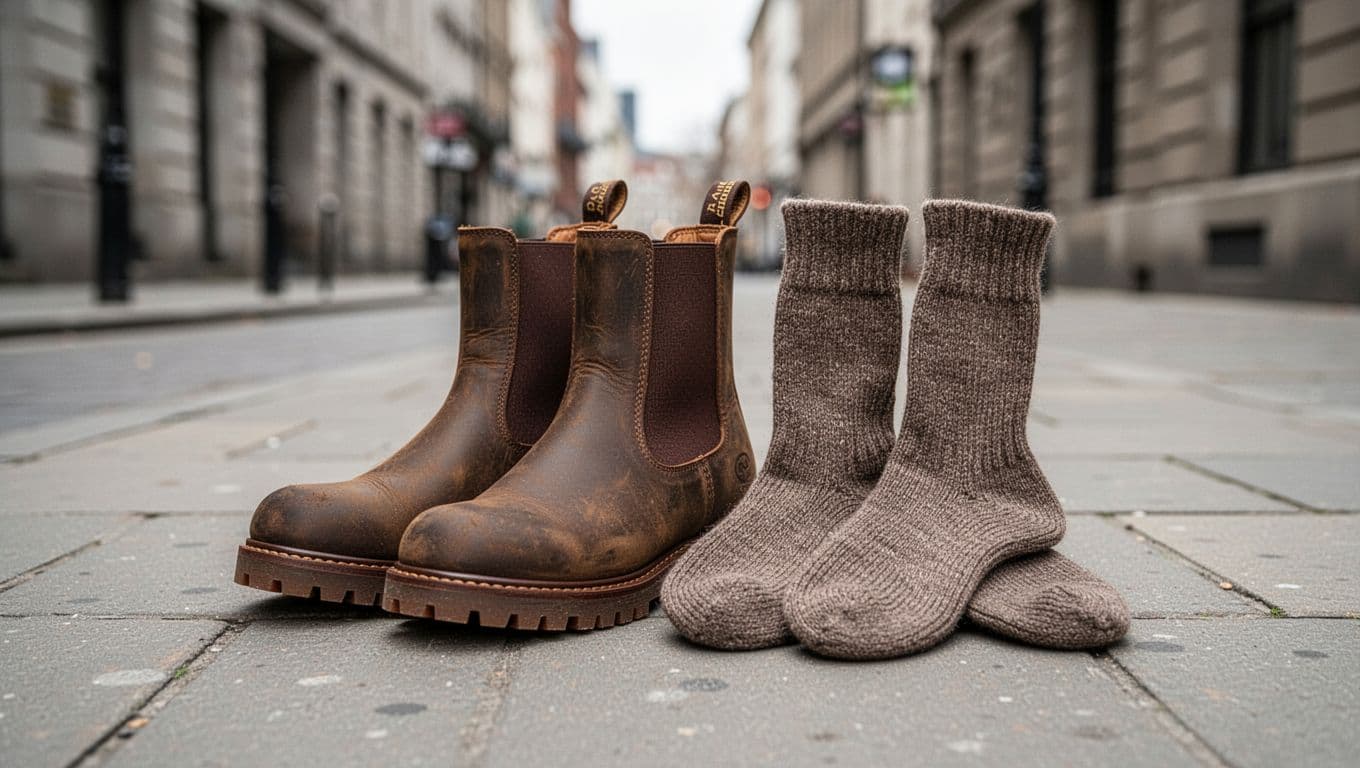
Choose the Sock Before Choosing the Size
A medium-weight merino crew sock works well for many city days. It adds warmth and cushioning without consuming as much space as a thick hiking sock.
If you wear heavy socks every day, have broad feet, or use an orthotic, try the half size first. Blundstone's own guidance recommends a half size up for a wider fit, and that extra width can also reduce pressure from winter-weight socks.
However, don't size up solely because a sock looks thick. A boot that allows your heel to lift can cause rubbing on subway stairs, wet pavement, and long blocks of walking.
Use a Simple In-Store Fit Test
Wear your intended sock pair and test both boots later in the day, when feet are naturally a little fuller. Focus on how the boot performs in motion.
- Walk briskly and check for heel lift that repeats with each step.
- Bend at the ankle and look for painful pressure across the instep.
- Stand still for a minute, then notice whether your toes feel compressed.
- Test one stair or incline if available, since downhill pressure reveals a short boot fast.
A well-fitted pair feels comfortably close around the heel and ankle. Your toes should never hit the front while walking downhill.
Adjust Volume With the Removable Footbed
Many Blundstone styles include a removable comfort footbed. That feature gives you options when the boot length is correct but the interior volume needs adjustment.
Removing a footbed creates more room for a thicker sock or a higher instep. Replacing it with a supportive insole can improve underfoot comfort if the boot has too much depth for thin socks.
When Removing the Footbed Makes Sense
Take the footbed out only when the boot feels crowded over the top of your foot, while the heel still stays in place. This can help people who need winter socks but don't need added boot length.
Try the adjustment at home on clean floors. Without the footbed, your foot sits lower in the boot, so confirm that the heel doesn't start moving more than it did before.
A thinner replacement insole can offer a middle ground. It preserves some cushioning while freeing a little room for a heavier sock.
Don't Use Insoles to Fix the Wrong Size
An insole can refine the fit, but it can't correct a boot that is too short, too narrow through the toe box, or too long in the heel. Excessive padding also creates new pressure points.
If your foot presses hard against the front, choose more length. If your toes have room but the leather squeezes the sides of your foot, consider the half size for width. That distinction makes Blundstone boot sizing far more accurate than automatically going up a full size.
What City Wear Demands From a Chelsea Boot
City wear asks a lot from a boot. You may spend an hour on concrete, climb stairs, stand on a train, and walk through rain before dinner. Fit has to work beyond the mirror.
A good city boot needs enough security for quick walking and enough cushioning for hard surfaces. It should also work with the socks and trousers you wear most often, not only with one favorite outfit.
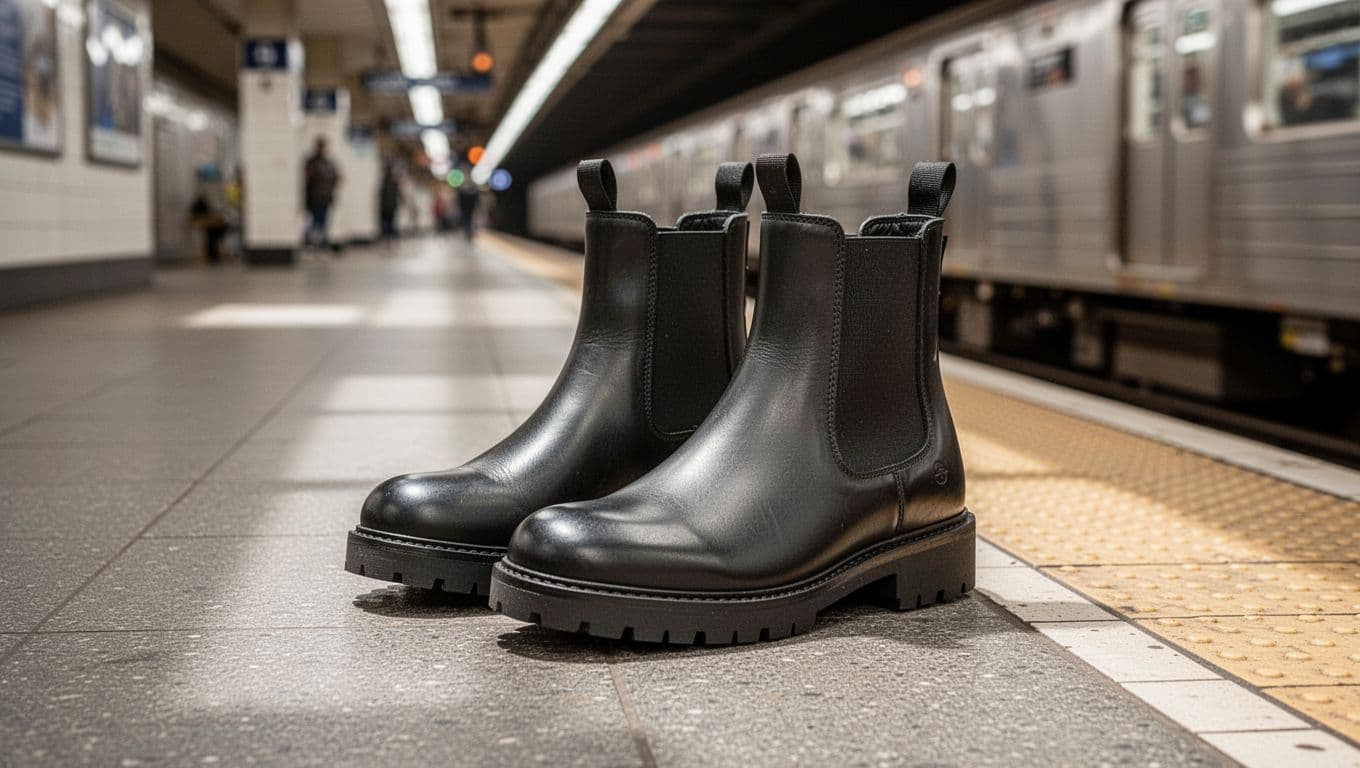
Prioritize Heel Hold for Long Walks
A slight amount of movement in a new leather boot can settle as the upper molds to your foot. Repeated heel lift is different. It creates friction and makes the boot less stable on uneven pavement.
Pull tabs and elastic side panels make Blundstones easy to put on, but they don't replace a close heel fit. When you take a normal stride, the back of the boot should move with your heel rather than lag behind it.
For long commutes, choose socks with a smooth heel and avoid bulky seams. A sock that bunches inside the boot causes more trouble than a sock that is merely thick.
Match the Boot to Your Daily Route
A low-profile Chelsea works well for office commutes, neighborhood errands, and dry-to-damp conditions. If your route includes slushy crossings or cold platforms, insulation and a more aggressive outsole may matter more than a sleeker shape.
Leather also needs basic care in city weather. Let boots dry at room temperature after rain, brush off salt promptly, and condition leather when it starts to look dry. Heat from a radiator can damage and stiffen the upper.
Pick a Blundstone Style That Fits Your Routine
The right silhouette affects more than appearance. A rugged sole, insulated lining, square toe, or chisel toe changes the amount of room and the role the boot plays in your wardrobe.
Use product details to narrow your options before comparing sizes. Then fit each style on its own, since two boots marked with the same size can feel different through the toe and instep.
| City-wear need | Blundstone option to consider | Useful details |
|---|---|---|
| Everyday jeans-and-jacket boot | Men's brown leather Blundstone 500s | Stout brown leather, lightweight everyday construction |
| Women's everyday weather coverage | Women's Blundstone 500 brown leather boots | 2.5 mm oiled leather, cushioned midsole, removable comfort footbed |
| Dressier work and evening wear | Men's black Blundstone 1901 boots | Chisel toe, removable footbed, slip-resistant TPU outsole |
| Cold and wet winter commutes | Men's 566 waterproof thermal boots | Waterproof elastic and seams, Thinsulate insulation, sheepskin footbed |
The Original 500 is a strong choice for a casual uniform because its profile works with denim, chinos, and heavier outerwear. Its oiled leather also suits shoppers who want a practical boot for unpredictable weather.
Consider Toe Shape and Winter Lining
A chisel-toe boot can look sharper with tailored trousers, but its forefoot may feel different than a rounder work-inspired Chelsea. Check toe room carefully if your second toe is long or your feet widen by afternoon.
The black 1901 dress ankle boot has a removable comfort footbed and cushioned midsole. It suits someone who wants a more polished city shoe while retaining the pull-on ease of a Chelsea boot.
For colder conditions, the 566 adds thermal insulation and a removable sheepskin footbed. That warmth takes up interior space, so don't assume its fit will match an unlined pair. Bring your true winter sock when trying insulated boots.
Break In Leather Without Forcing the Process
Blundstone leather will soften and mold to your foot, but break-in should never mean tolerating sharp pain. Start with a few shorter walks, then increase wear time over several days.
A new pair often feels firm around the ankle and elastic panels. That firmness fades with use. Pressure that makes your toes tingle or creates a hot spot will usually persist, because the boot's underlying dimensions aren't changing enough.
Watch for These Fit Warnings
Pay attention after 20 to 30 minutes of walking, not only when you first pull the boot on. Your feet warm up and expand, while the sock compresses under pressure.
Return to the sizing decision if you notice any of these problems:
- Your toes touch the front when descending stairs.
- The leather bites the side of your little toe.
- Your heel rises enough to rub against the back collar.
- The top of your foot feels numb with your usual socks.
A professional fitting is useful if one foot is larger, you wear custom orthotics, or you have recurring foot pain. The best-looking boot won't earn regular wear if it leaves you counting blocks until you can take it off.
Find a Fit You Can Walk In All Day
The best Blundstone boot sizing choice gives your foot room to function while keeping your heel stable. Start with proper length, use the half size when you need more width or sock volume, and test the boots with the socks you actually wear.
A pair that fits your city routine will handle long sidewalks, wet crossings, and busy days without becoming the thing you notice most. Comfort starts with fit, then gets better as the leather becomes your own.


