

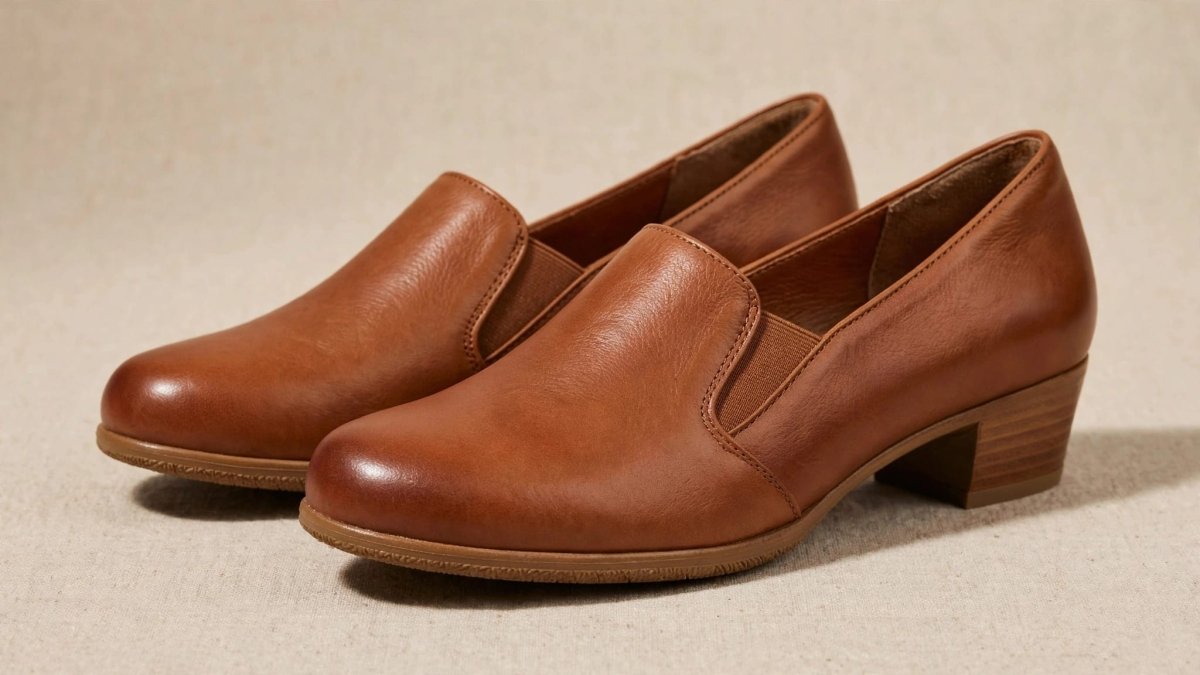
A shoe can be the right length and still feel too tight across the ball of your foot. If you're considering Munro shoes for wide feet, focus on the fit of each style, not the brand name alone. Room across the forefoot, secure heel hold, and comfortable toe space all matter.
Munro is among the brands listed by Tip Top Shoes, but fit depends on the individual shoe. Here's how to assess a pair and avoid relying on size alone.
Key Takeaways
- Judge a Munro shoe by its labeled width and how it fits your foot, not by the brand name alone.
- Measure both feet, since one may be wider or longer than the other.
- Check the forefoot, toes, instep, and heel while standing and walking.
- Don't assume sizing up will fix a narrow shoe. More length can create heel slip without giving the ball of your foot enough room.
- Choose the style and closure that suit your routine, then assess the fit in the socks you expect to wear.
Munro Shoes for Wide Feet: Start With the Specific Style
A brand name can help narrow your search, but it can't promise that every shoe will fit the same way. Different styles may have different shapes, materials, and closures, so one pair's comfort won't automatically predict how another pair will feel.
Munro appears among the brands listed by Tip Top Shoes. When considering a particular pair, look for its stated width and assess the shoe itself. In many U.S. women's size charts, B is medium and D is wide, but labels and offerings can vary. Don't assume a width designation is identical across every brand or style.
Width is only one part of the fit
A wide label can be useful, but it doesn't tell you everything about the shoe's shape. The widest part of your foot should sit comfortably within the shoe, without pressure from the sides or seams. Your toes also need room to rest naturally rather than being pushed together.
The upper matters, too. A closure that adjusts can make it easier to fine-tune the fit around the instep, while a fixed upper offers less flexibility. Neither design guarantees comfort, so assess the full shoe on your foot.
Check the fit on both feet
Feet often differ slightly in length or width. Try on both shoes and use the larger foot as your guide. If you shop in person, wear the socks you'd normally pair with that shoe. For online shopping, use the size and width information for the specific style rather than assuming another Munro pair will fit identically.
Measure Your Feet Before Comparing Widths
Knowing your measurements gives you a more useful starting point than relying on the size of a shoe you bought years ago. Feet can change over time, and sizing can vary between styles. Measure both feet while standing, since weight can spread the forefoot.
Compare length and width separately
Measure from the back of your heel to the tip of your longest toe. Then note the width across the broadest part of each foot, usually around the ball. Use the larger measurement when choosing a size, and keep length and width as separate considerations.
A shoe that's too short may press your toes forward. A shoe that's too narrow may squeeze the ball of your foot even when there's adequate space in front of your toes. Increasing length to address side pressure can leave extra room at the heel without solving the width problem.
Notice where you feel pressure
Pay attention to bunions, prominent joints, or toes that angle toward one another. Those areas may need more room or a different shoe shape. Also notice pressure across the top of your foot, which can come from a low or snug instep even when the sole seems wide enough.
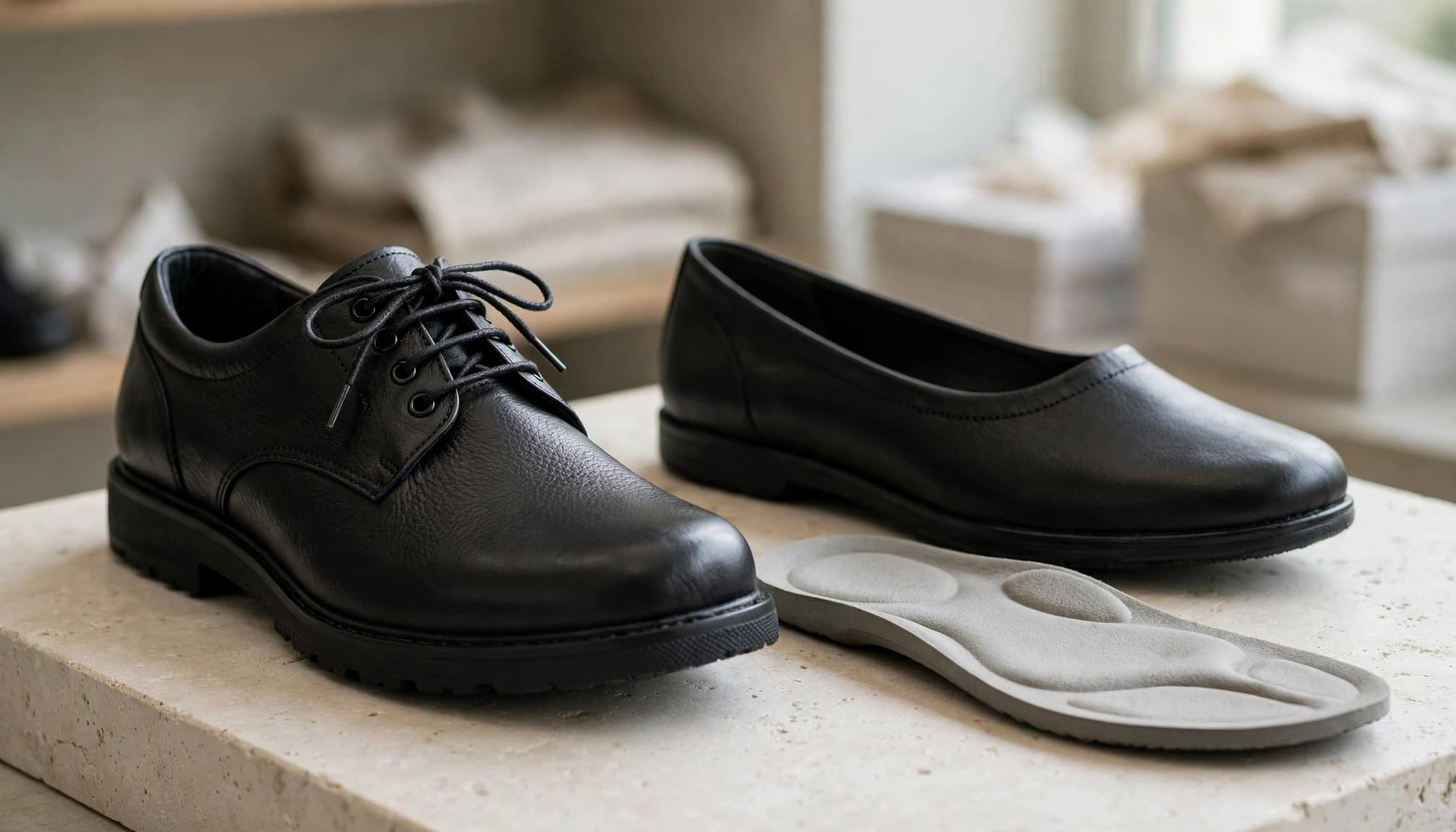
An illustrative footwear display, not a photograph of a Munro shoe.
How a Comfortable Fit Should Feel
A shoe should feel comfortable when you first put it on. Don't count on a tight spot stretching enough to become comfortable, especially if it presses on a sensitive part of your foot. Walk around in both shoes and notice how they feel through each step.
Look for space where your foot needs it
Your toes should be able to spread and move without hitting the front or sides of the shoe. The ball of your foot should rest at the shoe's widest point, without bulging over the sole or feeling squeezed by the upper. Also check the instep: pressure there can make a shoe uncomfortable even when the toe box seems roomy.
Pay attention to seams and edges as well. A seam that crosses a bunion or another prominent area may cause irritation during wear. Comfort depends on how the full upper meets your foot, not simply how wide the sole looks.
Keep your heel secure
A little movement can happen in some styles, but your heel shouldn't slip significantly with every step. If it does, the shoe may be too long, too roomy at the heel, or the wrong shape for your foot. Tightening laces or adjusting straps can help only when the shoe has that kind of closure.
Walk at your usual pace and turn as you would during the day. If a shoe pinches, rubs, or creates a hot spot during a short try-on, treat that as useful information rather than something you must tolerate.
Choose the Shoe Shape Around Your Routine
Start with how and where you plan to wear the shoes. A pair for long walks has different demands from a dress shoe worn for a short outing. Consider the surfaces you'll walk on, the socks you'll wear, and whether you need a closure you can adjust.
Consider uppers and closures
Laces, buckles, and adjustable straps can offer ways to change how snugly the shoe sits around your foot. Slip-on styles have fewer adjustment options, so their opening and instep need to feel comfortable as soon as you try them. A sandal may leave more of the foot exposed, but its sole still needs to support your foot without crowding the toes.
Think about the areas that usually bother you. If pressure across the instep is a concern, how the shoe closes may matter. If the sides of the forefoot are sensitive, check that the upper doesn't press against them when you stand and walk.
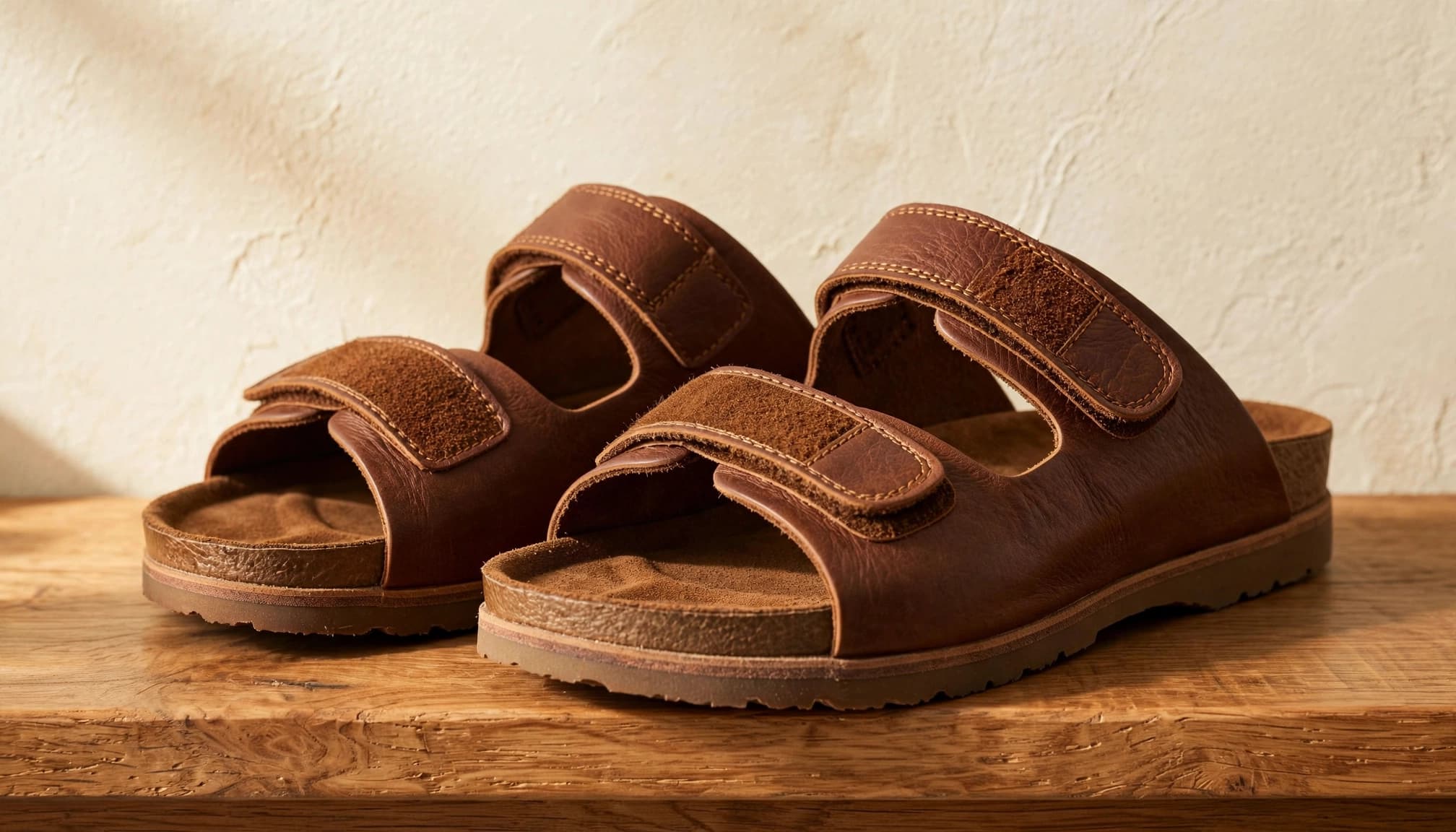
An illustrative sandal silhouette, not a photograph of a Munro style.
Compare silhouettes without assuming the fit
If you're also considering other shoe shapes, our Pikolinos P Vallarta black Mary Jane shoes and Gabor brown nubuck Chelsea boots offer examples of different closed-toe designs. They're other brands, so their sizing or fit can't predict how a Munro shoe will feel.
Try the Fit In Person or at Home
When you can try a pair on, do so later in the day if possible. Feet can swell over the course of daily activity, so a shoe that feels fine in the morning may feel snug later. Try both shoes with the socks you expect to wear, and stand before taking a few steps.
At Tip Top Shoes, we're a family-owned store at 155 West 72nd Street in New York City. If you're shopping in person, you can assess the fit on your feet and compare how different shapes feel while walking.
Use a simple fit sequence
Start by checking length while standing. Then assess the widest part of your foot, toe movement, instep pressure, and heel hold. Walk across the floor and turn in both directions. A comfortable shoe should stay in place without pinching or rubbing.
For online shopping, compare your measurements with the size and width details provided for the specific style. Keep the packaging and try the shoes indoors, so you can assess the fit before wearing them outside. If the upper presses on a sensitive area or your heel keeps lifting, a different width or shape may be a better choice.
Don't ignore persistent discomfort
A new shoe shouldn't cause ongoing pain, numbness, or skin irritation during a short try-on. Take it off if those symptoms occur. If foot pain is persistent or affects daily activity, a podiatrist or other qualified medical professional can help identify the cause and discuss footwear needs.
FAQ: Munro Shoes for Wide Feet
Do Munro shoes come in wide widths?
Width offerings can depend on the specific style. Read the width label for the pair you're considering and judge its fit on your foot. The brand name alone doesn't establish that a particular shoe will accommodate your width.
Should I order a larger size for a wide foot?
Not automatically. A longer size may add room in front of your toes while leaving the shoe too long or loose at the heel. Compare the shoe's width options and assess length and width separately.
How much room should I have in the toe box?
Your toes should rest without pressing into the front or sides of the shoe. They should have room to move naturally when you stand. If they feel crowded, the shoe may not have the shape or width you need.
Are adjustable shoes always better for wide feet?
Adjustability can help you fine-tune the fit around a closure, but it doesn't change every part of a shoe's shape. Check the toe area, ball of the foot, and sole width as well. A secure strap or lace cannot make a shoe comfortable if its base or upper still squeezes.
Find the Fit, Not Just the Size
When shopping for Munro shoes for wide feet, consider each style on its own. Use your measurements as a starting point, then judge forefoot room, toe space, and heel security while standing and walking.
A comfortable pair shouldn't require you to ignore pressure or hope a tight spot disappears. The right fit lets your foot rest naturally and move through the day without being squeezed.


